The main malocclusion types are crowding, spacing, increased overjet, deep bite, open bite, crossbite and underbite, and dentists also group bites into Class I, Class II and Class III depending on how the upper and lower jaws line up. Treatment ranges from monitoring to braces, clear aligners, extractions or, for some adults, jaw surgery.
Key Takeaways
- Malocclusion means the teeth or jaws do not meet in the ideal position when you bite.
- Dentists describe bites as Class I, II or III based on how the upper and lower molars and jaws relate.
- Causes include inherited jaw and tooth size, thumb sucking, early loss of baby teeth and tongue habits.
- Not every malocclusion needs treatment, but some raise the risk of tooth wear, injury, gum problems or jaw discomfort.
- Orthodontic treatment can be carried out in children and adults, with options chosen after an assessment.
What Is Malocclusion?
Occlusion is the way your upper and lower teeth meet when you close your mouth. In an ideal bite, the upper front teeth sit slightly in front of the lower front teeth, the back teeth interlock evenly, and the teeth are lined up without large gaps or overlaps.
Malocclusion is any noticeable departure from this. It can involve the position of individual teeth, the relationship between the jaws, or both. Very few people have a perfect bite, so malocclusion is a spectrum from minor and cosmetic to severe and functional. Our page on malocclusion and bite problems gives an overview of how the clinic approaches these concerns.
How Are Malocclusions Classified?
Dentists commonly use a system based on how the upper and lower first molars meet, which also reflects the general relationship of the jaws.
| Class | Jaw relationship | What it often looks like |
|---|---|---|
| Class I | Upper and lower jaws relate normally | Normal profile, but teeth may be crowded, spaced or rotated |
| Class II | Lower jaw sits further back relative to the upper jaw | Upper front teeth stick out or tilt back, often with a deep bite and a retruding chin |
| Class III | Lower jaw sits further forward relative to the upper jaw | Lower front teeth meet in front of the upper teeth, often a prominent chin |
Class II is often divided further. In division 1 the upper front teeth tilt forward, giving a large overjet. In division 2 the upper central incisors tilt backwards and the bite is usually deep.
What Are the Common Types of Malocclusion?
Within these classes, specific problems are described by what the teeth are doing. A person can have more than one at the same time.
Crowding
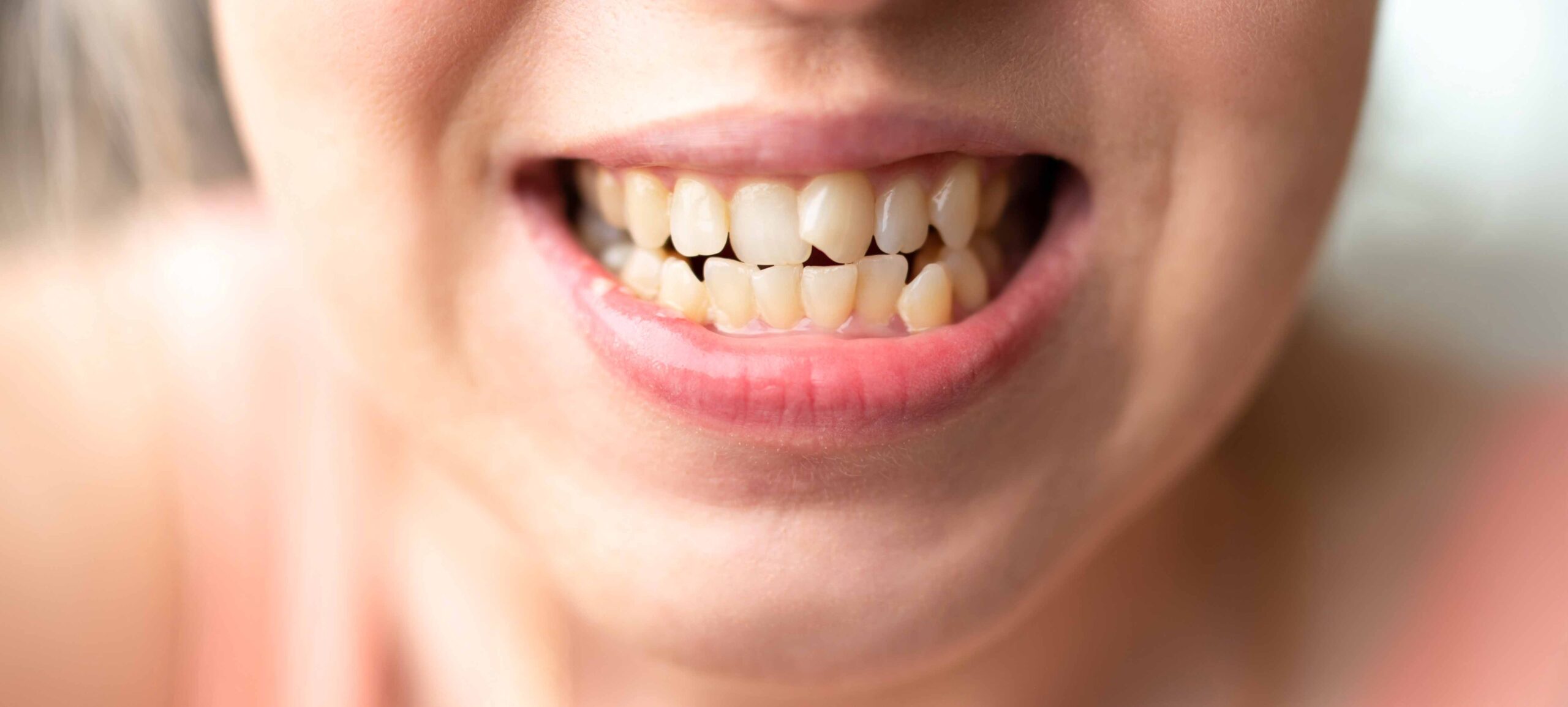
There is not enough room for the teeth, so they overlap, rotate or sit out of line. Crowded teeth are harder to clean. Our guide to crowded teeth treatment in Kuala Lumpur covers this in detail.
Spacing
Gaps between teeth, often because the teeth are small relative to the jaw, a tooth is missing, or a habit has pushed teeth apart.
Increased overjet
The upper front teeth sit well in front of the lower front teeth. People often call this buck teeth or an overbite. Prominent upper teeth are more easily chipped or knocked in a fall.
Deep bite
The upper front teeth overlap the lower ones too much vertically. In severe cases the lower teeth can bite into the gum behind the upper teeth.
Open bite
The front teeth do not meet when the back teeth are together, leaving a vertical gap. This can make biting into food such as noodles or sandwiches difficult and may affect some speech sounds.
Crossbite
One or more upper teeth sit inside the lower teeth instead of outside. It can affect front or back teeth, on one or both sides, and may cause the jaw to shift when closing.
Underbite
The lower front teeth sit in front of the upper front teeth. This is often linked to a Class III jaw relationship.
Midline shift
The centre line between the upper front teeth does not match the centre line between the lower ones, sometimes because of missing teeth or a jaw shift.
What Causes Bite Problems?
Most malocclusions result from a combination of inherited and environmental factors.
- Genetics: jaw size and shape, tooth size and missing or extra teeth often run in families.
- Prolonged thumb, finger or dummy sucking beyond the early childhood years, which can cause an open bite or overjet.
- Tongue thrusting or a resting tongue position that pushes against the teeth.
- Early loss of baby teeth from decay, allowing neighbouring teeth to drift into the space.
- Mouth breathing linked to blocked nasal airways, which can influence jaw growth.
- Injury to the jaw or teeth, or missing adult teeth that were never replaced.
Does Malocclusion Need Treatment?
Not always. A mild malocclusion that does not affect function, cleaning or appearance may only need monitoring. Treatment is usually recommended when the bite causes or is likely to cause problems such as:
- Difficulty cleaning overlapping teeth, raising the risk of decay and gum disease
- Uneven or accelerated tooth wear
- A higher risk of injury to protruding front teeth
- Gum damage from a deep bite
- Difficulty biting or chewing certain foods
- Jaw shifting on closing, or discomfort in some people
- Concern about appearance that affects confidence
How Is Malocclusion Treated?
The approach depends on the type and severity of the problem and on whether the jaws are still growing. Our orthodontic treatment service covers these options.
| Approach | Typically used for |
|---|---|
| Monitoring | Mild problems or children whose teeth are still changing |
| Interceptive appliances in children | Crossbites, habits or jaw growth differences that are easier to guide early |
| Fixed braces | Most types of tooth position problems, including complex cases |
| Clear aligners | Many mild to moderate cases in teenagers and adults |
| Extractions with orthodontics | Severe crowding or protrusion where space is needed |
| Orthodontics with jaw surgery | Significant skeletal differences in adults after growth has finished |
After any orthodontic treatment, retainers are needed to stop the teeth drifting back. If you are weighing up fixed braces against aligners, our comparison of Invisalign vs braces in Malaysia explains the differences.
When Should You Have Your Bite Checked?
Many orthodontists suggest a first bite check for children around the age of seven. Early checks do not usually mean early treatment, but they can catch problems that are simpler to guide while the jaws are growing.
Adults can be assessed at any age. Book a check if you notice teeth shifting, new gaps appearing, front teeth that are chipping or wearing down, difficulty biting, or a jaw that clicks or moves to one side when you close. At the consultation, the dentist or orthodontist examines your teeth, jaws and face, and may take photographs, X-rays and impressions or scans to plan treatment.
Book a Bite Assessment at Urban Dental
Urban Dental’s team includes consultant orthodontists, and we provide braces, clear aligners and orthodontic treatment at our clinic in DC Mall, Bukit Damansara. We will explain your bite type and the options available, with an itemised quotation after your assessment.
The right treatment for a malocclusion depends on a clinical assessment, and a treatment may not be suitable for everyone.
Visit us at Lot L1-17 & L1-18, First Floor, DC Mall, 6 Jalan Damanlela, Bukit Damansara, 50490 Kuala Lumpur. Call 03-2080 0887 or WhatsApp 012-994 1668, or book a bite assessment at our DC Mall clinic.
常见问题
What is the most common type of malocclusion?
Crowding is one of the most frequently seen bite problems, where there is not enough space in the jaw for the teeth to line up evenly. Many people have a Class I bite, meaning the jaws relate normally, but still have crowded or rotated teeth. Mild crowding may only be cosmetic, while severe crowding can make cleaning difficult.
Can malocclusion be fixed without braces?
Some mild cases can be treated with clear aligners instead of fixed braces, and small cosmetic concerns may be improved with bonding or veneers. However, moving teeth into a healthier bite usually needs orthodontic treatment of some kind. Severe jaw differences in adults may need orthodontics combined with jaw surgery. Your dentist will explain which options suit your bite.
Can adults correct a bad bite?
Yes. Teeth can be moved at any age as long as the gums and supporting bone are healthy. Adult treatment may take a little longer, and some skeletal problems cannot be fully corrected by braces alone once growth has finished. Many adults choose clear aligners or tooth-coloured braces for a more discreet option.
At what age should a child have their bite checked?
Many orthodontists suggest a first bite check around the age of seven, when the first adult molars and front teeth are coming through. Most children will not need treatment at that age, but early checks can identify crossbites, severe crowding or habits that are best addressed while the jaws are still growing.
Is malocclusion genetic?
Often, partly. Jaw size and shape, tooth size and the number of teeth tend to run in families, so skeletal bite problems such as an underbite can be inherited. Environmental factors also play a part, including prolonged thumb sucking, early loss of baby teeth, tongue thrusting and mouth breathing. Many cases involve a mix of both.
This article is general information and does not replace a dental examination. Speak to a dentist about your own situation.