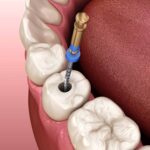
In the root canal vs extraction decision, keeping your natural tooth with root canal treatment is usually preferred when the tooth can be restored and has healthy bone and gum support. Extraction becomes the better fit when the tooth is badly broken, cracked down the root or loose from advanced gum disease. A dentist decides after examining the tooth.
Key Takeaways
- Root canal treatment removes infected or inflamed pulp from inside the tooth so the tooth itself can be kept.
- Extraction removes the problem quickly, but leaves a gap that usually needs an implant, bridge or denture to restore chewing and stop teeth drifting.
- Whether a tooth can be saved depends mainly on how much sound tooth is left, whether the root is cracked and how healthy the supporting gum and bone are.
- Back teeth treated with a root canal usually need a crown afterwards to protect them from fracture.
- Comparing only the first appointment can be misleading; the total cost and time of each pathway matter.
What Does Each Option Involve?
Both treatments deal with the same underlying problem: bacteria or injury have reached the pulp, the soft tissue in the centre of the tooth that contains nerves and blood vessels. Once the pulp is badly inflamed or infected, it cannot heal by itself, and leaving it can lead to an abscess.
Root canal treatment
The dentist numbs the tooth, makes a small opening, removes the pulp, cleans and shapes the root canals, disinfects them and seals them with a filling material. The tooth is then rebuilt with a filling or crown. It usually takes one to three visits. Our root canal treatment service page outlines the process, and our article on root canal procedure, pain and recovery covers what it feels like.
Extraction
The dentist numbs the area, loosens the tooth from its socket and removes it. Some teeth come out in one piece; others, especially molars with curved roots, are divided and removed in sections. The socket then heals over several weeks. See our tooth extraction service for details.
When Does Root Canal Treatment Make Sense?
Saving a natural tooth is generally the first option to consider, because your own tooth keeps its natural root, bite feel and bone support. Root canal treatment tends to suit a tooth when:
- there is enough sound tooth structure left to rebuild with a filling or crown
- the root is intact, with no split running down its length
- the gum and bone around the tooth are healthy enough to hold it firmly
- the tooth is important for chewing or appearance, such as a first molar or a front tooth
- the root canals can be reached and cleaned, which the dentist judges on X-ray
After treatment, back teeth usually need a crown, because they take heavy chewing forces and a root-treated tooth with large fillings is more prone to cracking. Read more in do you need a crown after a root canal.
When Is Extraction the Better Option?
Some teeth cannot be predictably saved, and trying to do so may only delay an extraction. Extraction is often advised when:
- the tooth is broken off at or below the gumline, leaving too little to hold a crown
- there is a vertical crack running down the root
- advanced gum disease has destroyed much of the supporting bone and the tooth is loose
- decay has spread so far that rebuilding the tooth would not be reliable
- a previous root canal has failed and retreatment is unlikely to succeed
- the tooth has little function, such as some wisdom teeth without an opposing tooth
Personal circumstances matter too. Your general health, how many visits you can attend and your budget for the full pathway are all reasonable things to raise with your dentist.
Root Canal vs Extraction Compared
| Factor | Root canal treatment | Extraction |
|---|---|---|
| Natural tooth | Kept | Removed |
| Visits for the main treatment | Usually one to three | Usually one |
| Further treatment usually needed | Crown or large filling | Implant, bridge or denture to fill the gap, unless the tooth is not needed |
| Recovery | Tenderness for a few days | Socket healing over several weeks; care needed to avoid dry socket |
| Effect on neighbouring teeth | Bite and spacing preserved | Nearby teeth may tilt or drift if the gap is left |
| Bone at the site | Maintained by the root | Bone shrinks gradually once the tooth is gone |
| Overall time to finish | Weeks, including the crown | Fast if the gap is left; months if an implant is placed |
Extraction can look simpler and cheaper at the first visit. Once you add the cost and time of replacing the tooth, the comparison often looks different. Clinics in Malaysia must keep a list of clinical procedural fees available for patients, and you can ask for an itemised quotation for each pathway after your assessment.
What Happens to the Gap After an Extraction?
A missing back tooth may not seem to matter at first, but over time it can affect the rest of the mouth:
- the teeth on either side can tip into the space
- the opposing tooth can grow down into the gap, changing the bite
- food can trap more easily, raising the risk of decay and gum problems
- chewing shifts to the other side, placing more load on those teeth
- the jawbone in the area slowly shrinks, which can make an implant harder to place later
The main replacement options are a dental implant, a fixed bridge or a removable denture. Our guide to dental bridge vs dental implant compares the two fixed options. Some teeth, like a wisdom tooth with no partner, can be removed without needing replacement.
Common Myths About Both Treatments
“A root canal is more painful than an extraction”
Both are carried out under local anaesthetic, and most people feel pressure rather than sharp pain during either. The pain people associate with root canals is usually the toothache before treatment, which the procedure is designed to relieve.
“Root canal treatment makes you ill”
An old theory linked root-treated teeth to illness elsewhere in the body. It was based on flawed research from the early 1900s and is not supported by modern evidence. Leaving an infected tooth untreated is the real risk.
“A root-treated tooth is dead and will fall out”
The tooth no longer has a living nerve, but it is still held in place by living gum and bone. With a good seal, a crown where needed and regular care, root-treated teeth often last many years.
How Does a Dentist Decide?
At a consultation the dentist gathers enough information to judge whether the tooth is restorable and what each option would involve for you. This usually includes:
- asking about your symptoms, such as lingering pain, night pain or swelling
- examining the tooth, gum and bite, and checking for cracks or looseness
- testing how the tooth responds to cold and to gentle tapping
- measuring the gum pockets around the tooth
- taking X-rays to see the roots, the extent of decay and the bone around the tooth
The dentist should then explain the likely outcome of each option, what further treatment would follow and how long the whole process might take. If you have swelling, fever or difficulty swallowing, seek care the same day rather than waiting.
Book a Consultation at Urban Dental
Urban Dental provides root canal treatment, tooth extraction and tooth replacement options including bridges and implants. Whether a tooth can be saved depends on a clinical assessment, and a treatment may not be suitable for everyone.
Visit us at Lot L1-17 & L1-18, First Floor, DC Mall (Damansara City Mall), 6 Jalan Damanlela, Bukit Damansara, 50490 Kuala Lumpur. Call 03-2080 0887 or WhatsApp 012-994 1668, or book a consultation about an infected tooth at our DC Mall clinic.
Frequently Asked Questions
Is it better to save a tooth or pull it?
When a tooth can be restored and has healthy support, saving it with root canal treatment is usually preferred, because your natural tooth keeps the bite, spacing and bone in place. Extraction is often the better choice when the tooth is cracked through the root, badly broken or loose from gum disease. A dentist can tell you which applies.
Is extraction cheaper than a root canal?
The extraction appointment itself usually costs less than root canal treatment and a crown. However, if the gap then needs an implant, bridge or denture, the total can be similar or higher. Ask for an itemised quotation for both pathways after your examination so you can compare the full cost and time.
Can I have a tooth extracted instead of a root canal?
Yes, extraction is always an alternative to root canal treatment, and the choice is yours after the dentist explains the options. Before deciding, consider whether the tooth will need replacing, how the gap might affect neighbouring teeth and whether keeping your own tooth matters to you. Your dentist can talk through each consequence.
How long can I wait before treating an infected tooth?
An infected tooth should be assessed promptly. Infection does not resolve without treatment, and antibiotics alone only control it temporarily. Delay can lead to an abscess, more bone loss and a tooth that can no longer be saved. Swelling of the face, fever or difficulty swallowing needs same-day attention.
Can a tooth with a failed root canal be saved?
Sometimes. A failed root canal can often be retreated by removing the old filling material, cleaning the canals again and resealing them. In some cases a small surgical procedure at the root tip is an option. If the root is cracked or the tooth is badly broken down, extraction may be the more predictable choice.
This article is general information and does not replace a dental examination. Speak to a dentist about your own situation.